
1. Wprowadzenie
Welcome to the Dyness 12V 100Ah LiFePO4 Deep Cycle Battery user manual. This document provides essential information for the safe and efficient use of your battery. It is designed for various applications including RVs, marine systems, off-grid solar installations, and backup power. Please read this manual thoroughly before installation and operation.
2. Informacje dotyczące bezpieczeństwa
OSTRZEŻENIE: Nieprzestrzeganie tych instrukcji bezpieczeństwa może spowodować poważne obrażenia, uszkodzenie mienia lub śmierć.
- Podczas obsługi akumulatorów należy zawsze nosić odpowiedni sprzęt ochrony osobistej (PPE), obejmujący okulary ochronne i rękawice izolacyjne.
- Do not short-circuit the battery terminals. This can cause severe arcing, fire, or explosion.
- Trzymaj akumulator z dala od źródeł ciepła, otwartego ognia i materiałów łatwopalnych.
- Do not disassemble, puncture, drop, or damage the battery. Internal components are hazardous.
- Podczas ładowania i pracy należy zapewnić odpowiednią wentylację, aby zapobiec gromadzeniu się ciepła.
- Use only compatible chargers specifically designed for LiFePO4 batteries (e.g., a 14.6V 20A lithium-ion charger). Using an incompatible charger can damage the battery or cause a fire.
- Avoid charging or discharging the battery outside the specified temperature ranges. The integrated BMS will provide protection, but external conditions should be monitored.
- W przypadku pożaru należy użyć gaśnicy klasy D. Woda może zaostrzyć pożary litu.
- Przechowywać w miejscu niedostępnym dla dzieci i zwierząt domowych.
- Do not connect the battery to a load or charger if it shows signs of damage, swelling, or leakage.
3. Koniec produktuview
The Dyness 12V 100Ah LiFePO4 Deep Cycle Battery is a high-performance energy storage solution. It features Grade A+ lithium iron phosphate cells, offering a long cycle life and stable voltage output for reliable power.
Główne cechy:
- Zaawansowany 100A BMS: An integrated Battery Management System provides comprehensive protection against overcharge, over-discharge, over-current, short-circuit, and extreme temperatures.
- Ochrona przed niską temperaturą: Charging automatically stops below 0°C (32°F), and discharging stops below -20°C (-4°F) to ensure safety and prolong battery life.
- Wydłużony cykl życia: Designed for over 4,000 deep charge-discharge cycles, with minimal capacity loss, and up to 15,000 cycles under specific conditions.
- Niski współczynnik samorozładowania: Approximately 1-2% per month, significantly lower than lead-acid batteries, allowing for easier storage.
- Skalowalna konstrukcja: Up to 16 battery modules can be connected (4 in series x 4 in parallel) to achieve a maximum system capacity of 51.2V and 400Ah (20,480 Wh).
- Lekka: Weighs only 9.9 kg, approximately one-third the weight of comparable lead-acid batteries.

Image: Internal structure highlighting Grade A+ cells and the impressive 4000+ cycle life.
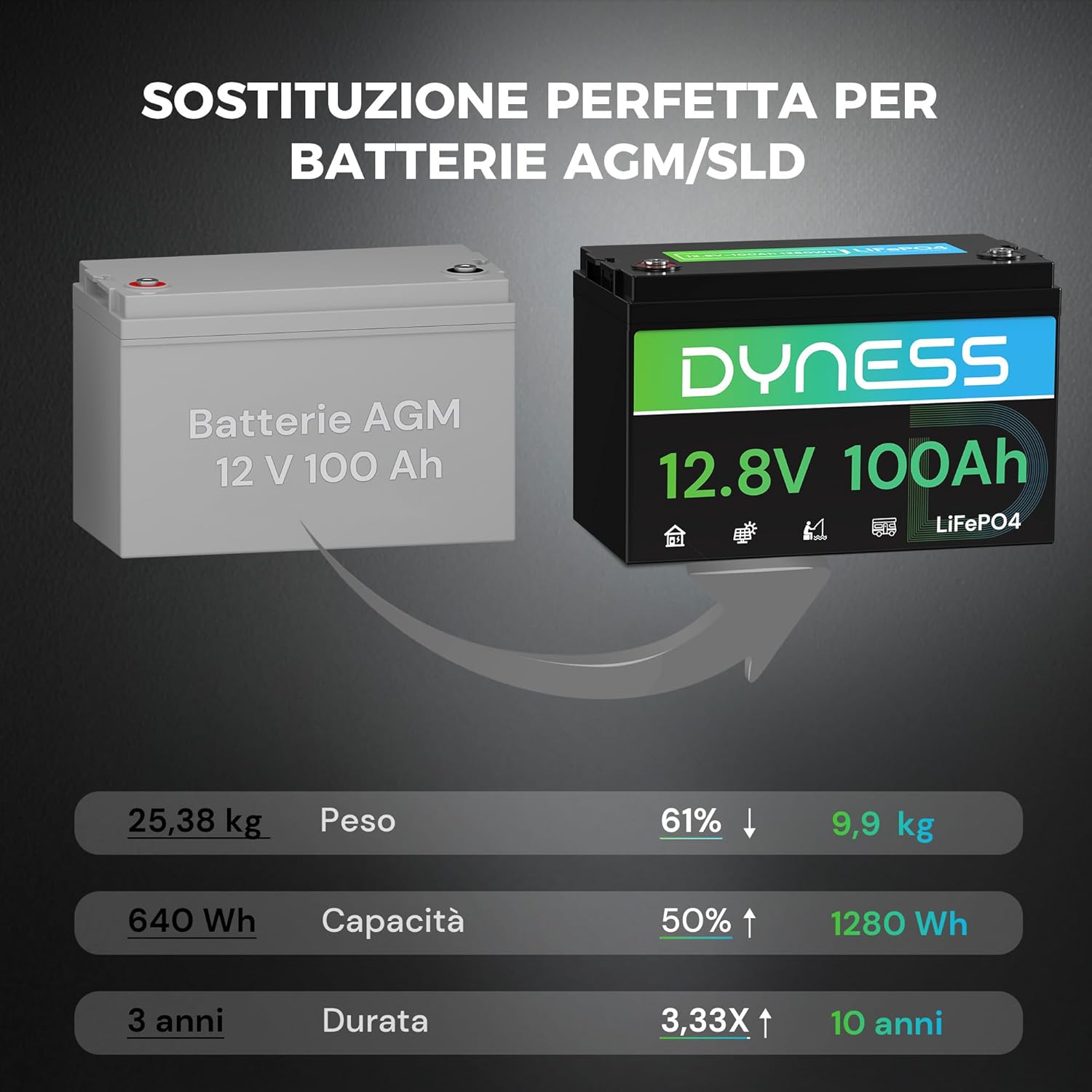
Image: Comparison of Dyness LiFePO4 battery with traditional AGM/SLA batteries, showing benefits in weight, capacity, and lifespan.
4. Konfiguracja
4.1 Rozpakowanie i kontrola
Carefully remove the battery from its packaging. Inspect the battery for any signs of physical damage, such as cracks, dents, or swelling. If any damage is observed, do not proceed with installation and contact customer support immediately.
4.2 Opłata początkowa
It is recommended to fully charge the battery before its first use to ensure optimal performance and calibration of the Battery Management System (BMS).
4.3 Połączenie
Ensure all connections are secure and properly tightened to prevent resistance and potential hazards.
- Podłącz dodatni (+) biegun akumulatora do dodatniego (+) bieguna obciążenia/ładowarki.
- Podłącz ujemny (-) zacisk akumulatora do ujemnego (-) zacisku obciążenia/ładowarki.
For Multiple Batteries:
- Połączenie równoległe: To increase total capacity (Ampere-hours) while maintaining the nominal voltage (12.8V), connect positive terminals together and negative terminals together.
- Połączenie szeregowe: To increase total voltage, connect the positive terminal of one battery to the negative terminal of the next battery.
The Dyness 12V 100Ah battery supports connecting up to 16 modules (4 in series x 4 in parallel) for a maximum system of 51.2V 400Ah (20,480 Wh).
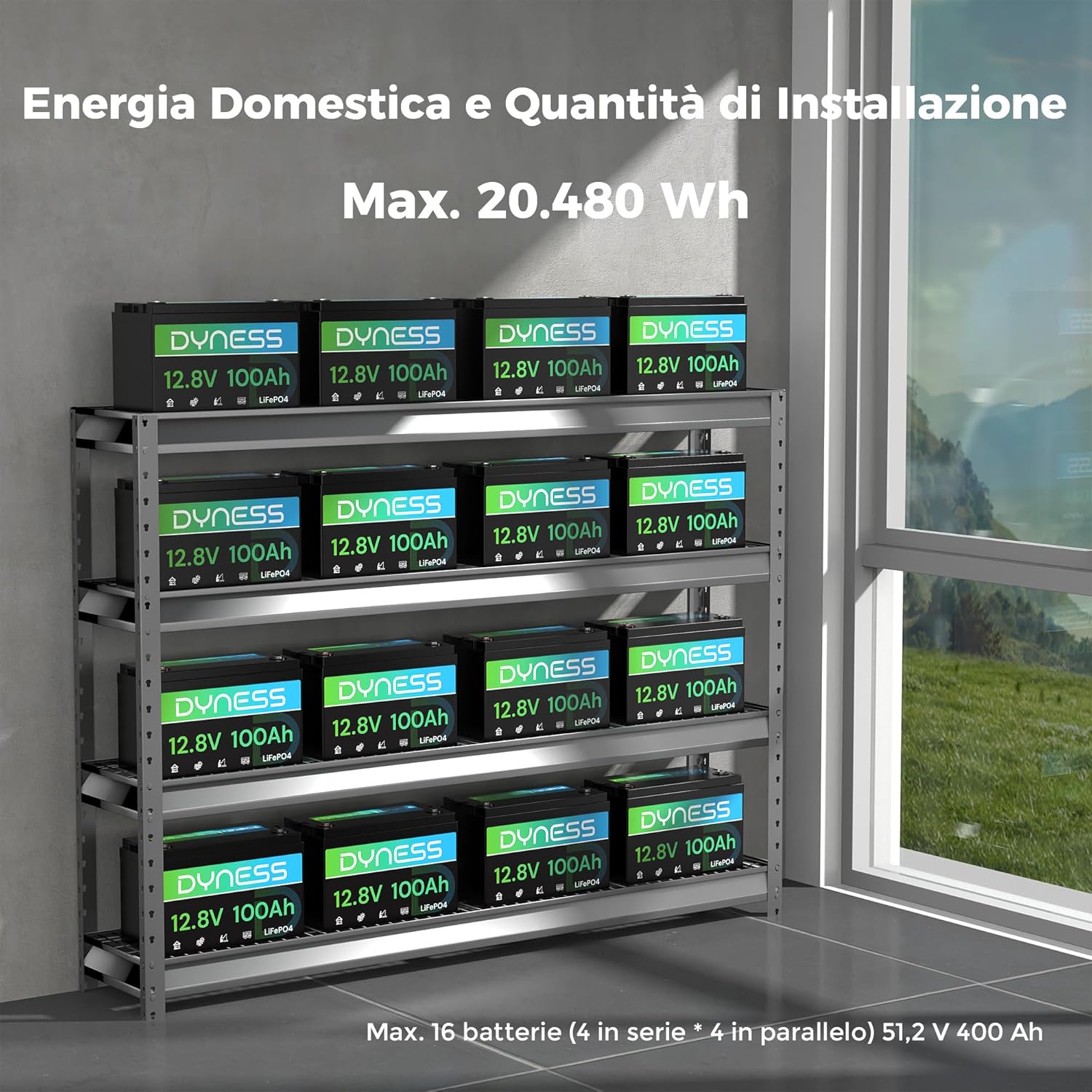
Image: Illustration of connecting multiple batteries for scalable energy storage, up to 16 modules.
4.4 Recommended Charger
Use a 14.6V 20A lithium-ion charger or connect to solar panels/generators with a rated power of ≥400W for optimal charging performance.
5. Instrukcja obsługi
5.1 Normalna praca
The battery is designed for deep cycle applications, providing stable power output for extended periods. Monitor your system's voltage and current to ensure it operates within the battery's specifications.
5.2 Zagadnienia dotyczące temperatury
The integrated BMS actively protects the battery from extreme temperatures:
- Odcięcie ładowania: Charging will automatically cease if the battery temperature drops below 0°C (32°F).
- Odcięcie rozładowania: Discharging will automatically cease if the battery temperature drops below -20°C (-4°F).
- Charging Resumption: Charging resumes when the temperature rises above 5°C (41°F).
These features ensure the battery's longevity and safe operation in various climates.

Image: Explanation of the low temperature shutdown feature, detailing charging and discharging cut-off temperatures.
5.3 Zastosowania
Ten akumulator idealnie nadaje się do szerokiej gamy zastosowań:
- Kampery i Campers
- Marine and Boat Systems
- Systemy solarne poza siecią
- Magazynowanie energii fotowoltaicznej
- Systemy zasilania awaryjnego
Note: This battery is not suitable for automotive starting applications or vehicles requiring start-stop functionality.

Image: Dyness battery being used as an emergency power source for an RV.
6. Konserwacja
6.1 Regularna kontrola
Periodically inspect the battery terminals for any signs of corrosion or loose connections. Ensure all connections are tight and clean.
6.2 Czyszczenie
Utrzymuj baterię w czystości i suchości. Użyj reklamyamp cloth to wipe the exterior. Do not use solvents or abrasive cleaners, as these can damage the battery casing.
6.3 Przechowywanie
If storing the battery for an extended period (more than one month), ensure it is charged to approximately 50-70% of its capacity. Store the battery in a cool, dry place, away from direct sunlight, moisture, and extreme temperatures. The low self-discharge rate of LiFePO4 batteries minimizes capacity loss during storage, but periodic checks are recommended.
7. Rozwiązywanie Problemów
W tej sekcji znajdziesz rozwiązania typowych problemów, z którymi możesz się spotkać. Jeśli problem będzie się powtarzał, skontaktuj się z obsługą klienta.
7.1 Bateria nie ładuje się
- Sprawdź połączenia: Ensure all charging cables are securely connected to both the battery and the charger.
- Sprawdź kompatybilność ładowarki: Confirm that your charger is specifically designed for LiFePO4 batteries and is functioning correctly.
- Kontrola temperatury: Ensure the ambient temperature is above 0°C (32°F). The BMS will prevent charging below this temperature.
7.2 Akumulator nie rozładowuje się / Brak mocy wyjściowej
- Sprawdź połączenia: Verify all load connections are secure and correct.
- Zgodność obciążenia: Ensure the connected load is within the battery's specified current and power limits.
- Kontrola temperatury: Ensure the ambient temperature is above -20°C (-4°F). The BMS will prevent discharging below this temperature.
- Ochrona BMS: The BMS may have activated a protection mode (e.g., over-discharge, short-circuit, over-current). Disconnect the load, wait a few minutes, and try reconnecting. If the issue persists, contact support.
7.3 Unusual Odor or Swelling
Immediately disconnect the battery from all loads and chargers. Do not attempt to use or charge the battery. Contact Dyness customer support without delay.
8. Specyfikacje

Image: Detailed dimensions of the Dyness 12.8V 100Ah LiFePO4 battery.
| Specyfikacja | Wartość |
|---|---|
| Marka | Dyness |
| Model | 12 V 100 Ah LiFePO4 |
| Objętość nominalnatage | 12.8 wolty |
| Pojemność | 100 Ampwkrótce (Ah) |
| Chemia baterii | Fosforan litowo-żelazowy (LiFePO4) |
| Zintegrowany BMS | 100A |
| Cykl życia | Up to 15,000 cycles (4,000 cycles at 100% DoD) |
| Odcięcie ładowania w niskiej temperaturze | 0°C (32°F) |
| Odcięcie rozładowania w niskiej temperaturze | -20°C (-4°F) |
| Wymiary (dł. x szer. x wys.) | 33 x 17.2 x 21.4 cm (13 x 6.77 x 8.43 cala) |
| Waga | 9.9 kilogramów |
| Maksymalne połączenie szeregowe | 4 baterie |
| Maksymalne połączenie równoległe | 4 batteries (up to 16 total modules in 4S4P) |
| Certyfikaty | CE/UN38.3 |
9. Gwarancja i wsparcie
9.1 Gwarancja
The Dyness 12V 100Ah LiFePO4 Deep Cycle Battery comes with a 5-letnia gwarancja od daty zakupu. Niniejsza gwarancja obejmuje wady materiałowe i wykonawcze w normalnych warunkach użytkowania i serwisowania. Prosimy zachować dowód zakupu na wypadek roszczeń gwarancyjnych.
9.2 Obsługa klienta
For technical assistance, warranty claims, or any questions regarding your Dyness battery, please contact Dyness customer support. Dyness offers 24/7 customer assistance for immediate support. Refer to the official Dyness webAby uzyskać najaktualniejsze dane kontaktowe, odwiedź witrynę lub dokumentację zakupu.


