

1. Wprowadzenie
This manual provides essential information for the proper use, installation, and maintenance of the uxcell 2136-8M-20 Timing Belt. This synchronous belt is designed for reliable power transmission in various industrial applications.
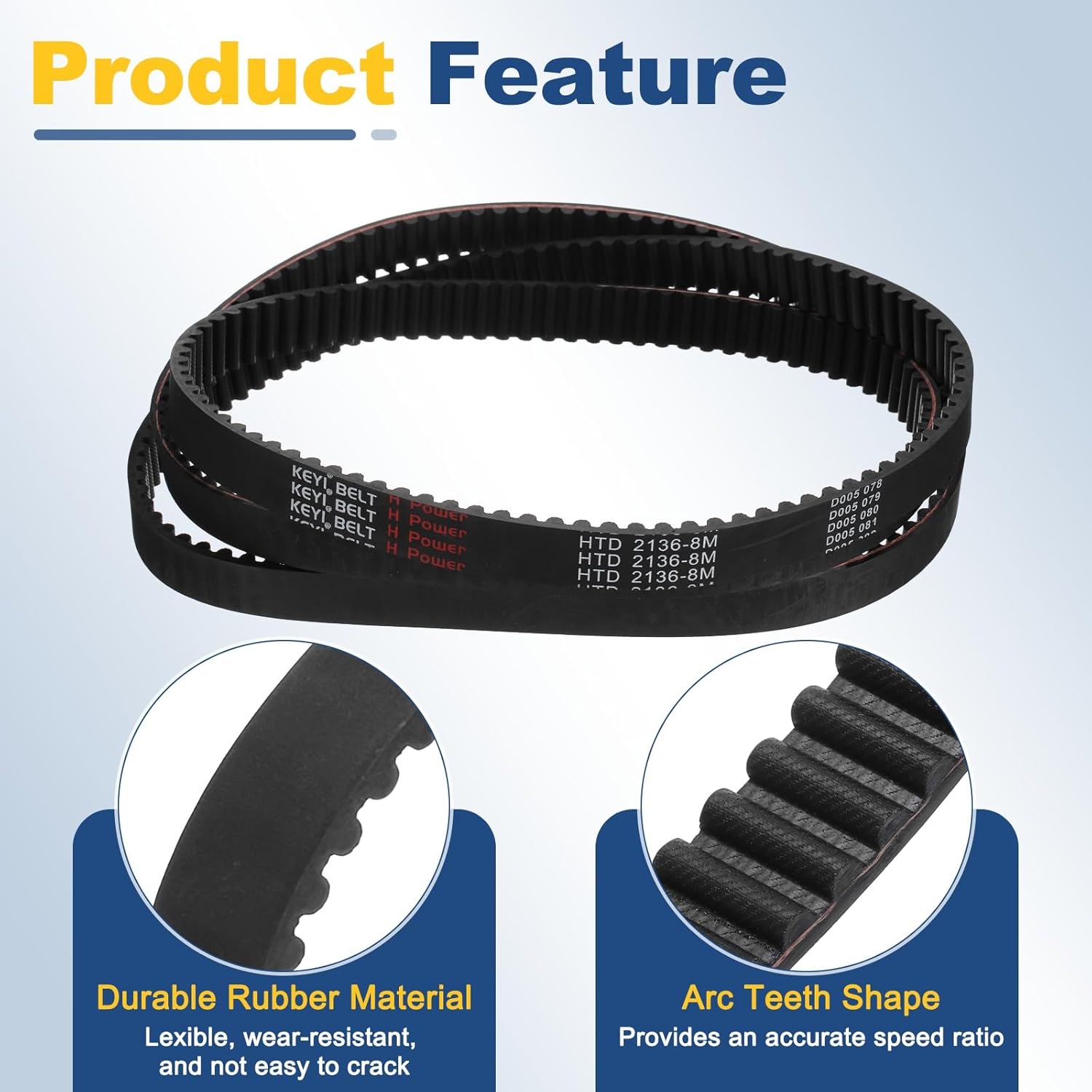
Image: The uxcell timing belt highlighting its durable rubber material and arc teeth shape.
Główne cechy:
- Durable Rubber Material: Flexible, wear-resistant, and designed to prevent cracking.
- Glass Fiber Wire: Embedded for high tensile strength and load-bearing capacity, ensuring stable transmission.
- Arc Tooth Profile: Ensures optimal meshing with pulleys, reducing friction and noise, and providing an accurate speed ratio with anti-slip transmission.
- High Power Transmission: Capable of transmitting 3-5 times greater power than trapezoidal tooth pulleys, suitable for high-power and high-torque applications.
2. Specyfikacje
The following table details the technical specifications for the uxcell 2136-8M-20 Timing Belt.

Image: Diagram illustrating the dimensions and tooth profile of the 8M timing belt.
| Specyfikacja | Wartość |
|---|---|
| Model | 2136-8M-20 |
| Pitch Circumference | 2136 mm / 84.09 cali |
| Szerokość | 20 mm / 0.79 cali |
| Wysokość | 5.6 mm / 0.22 cali |
| Teeth Pitch | 8 mm / 0.31 cali |
| Teeth Height | 3.38 mm / 0.13 cali |
| Liczba zębów | 267 zębów |
| Tworzywo | Rubber with Glass Fiber Wire |
Note: Manual measurements may have slight variations.
3. Konfiguracja i instalacja
Proper installation is crucial for the optimal performance and longevity of the timing belt. Always refer to the equipment manufacturer's specific instructions for belt replacement and tensioning.

Image: Various power transmission components including a timing belt, pulleys, and bearings.
- Bezpieczeństwo przede wszystkim: Ensure all power to the machinery is disconnected and locked out before beginning any installation work.
- Sprawdź komponenty: Before installing the new belt, inspect pulleys, bearings, and other associated components for wear, damage, or misalignment. Replace any worn parts.
- Czyszczenie powierzchni: Clean all pulley grooves and contact surfaces to remove any debris, oil, or grease that could affect belt grip or cause premature wear.
- Install Belt: Carefully place the timing belt onto the pulleys. Avoid forcing or prying the belt, as this can damage the internal cords. Ensure the belt teeth fully engage with the pulley grooves.
- Napinanie: Adjust the tensioning mechanism according to the equipment manufacturer's specifications. Correct tension is vital:
- Zbyt luźny: Can lead to tooth jumping, slippage, and premature wear.
- Za ciasno: Can cause excessive load on bearings, increased friction, and reduced belt life.
- Wyrównanie: Verify that the pulleys are correctly aligned. Misalignment can cause uneven belt wear, noise, and reduced efficiency.
- Początkowe docieranie: After installation, run the machinery at a reduced speed for a short period and re-check the belt tension and alignment.

Image: A timing belt correctly installed on a machinery component, demonstrating proper engagement.
4. Wytyczne operacyjne
Once installed, the timing belt operates as a critical component in synchronous power transmission. Adhere to the following guidelines for optimal performance:
- Maintain Proper Load: Operate the machinery within its specified load limits to prevent excessive stress on the belt.
- Avoid Sudden Starts/Stops: Rapid acceleration or deceleration can induce shock loads, potentially damaging the belt teeth or internal structure.
- Warunki środowiskowe: Ensure the operating environment is within the belt's temperature and chemical resistance specifications. Extreme conditions can degrade belt material.
- Regularne monitorowanie: Periodically observe the belt during operation for any unusual noises, vibrations, or signs of slippage.
5. Konserwacja
Regular maintenance extends the life of your timing belt and ensures consistent performance. Always perform maintenance with the machinery powered off and secured.
- Kontrola napięcia: Regularly check and adjust belt tension. If the belt cannot maintain proper tension after adjustment, it indicates wear and requires replacement.
- Kontrola wizualna: Periodically inspect the belt for signs of wear, such as:
- Cracks or fraying on the belt surface.
- Missing or damaged teeth.
- Excessive glazing or hardening of the rubber.
- Signs of foreign material embedded in the belt or pulley grooves.
- Czyszczenie: Keep the belt and pulley area clean from dust, dirt, and other contaminants. Avoid using harsh chemicals that could degrade the rubber.
- Składowanie: Store spare belts in a cool, dry place away from direct sunlight, high humidity, and ozone-generating equipment. Avoid bending or creasing belts during storage.
- Wymiana: Replace the timing belt if any significant wear or damage is observed, or according to the machinery manufacturer's recommended service intervals.
6. Rozwiązywanie typowych problemów
This section addresses common problems encountered with timing belts and potential solutions.
| Problem | Możliwa przyczyna i rozwiązanie |
|---|---|
| Belt Slippage / Tooth Jumping |
|
| Excessive Noise (Whining, Squealing) |
|
| Premature Belt Wear / Cracking |
|
| Belt Edge Wear |
|
7. Gwarancja i wsparcie
For information regarding product warranty or technical support, please refer to the uxcell official website or contact your point of purchase. Ensure you have your product model number (2136-8M-20) available when seeking support.
This product is subject to a standard return policy of 30 days for refund or replacement, as per the purchase terms.
Aby uzyskać dalszą pomoc, możesz odwiedzić stronę uxcell Store on Amazon.