
1. Wprowadzenie
This manual provides essential information for the safe and effective operation, maintenance, and troubleshooting of your EBERTH GG1-HR196-200 Gasoline Pressure Washer. Please read these instructions carefully before assembly, starting, or servicing the unit. Keep this manual for future reference.

Figure 1: EBERTH GG1-HR196-200 Gasoline Pressure Washer
2. Instrukcje bezpieczeństwa
Aby zapobiec obrażeniom ciała lub uszkodzeniu sprzętu, należy zawsze przestrzegać następujących środków ostrożności:
- Przeczytaj instrukcję: Familiarize yourself with all controls and safety warnings before operation.
- Środki ochrony osobistej (PPE): Wear eye protection, hearing protection, and appropriate clothing (gloves, sturdy shoes) during operation.
- Bezpieczeństwo paliwa: Gasoline is highly flammable. Refuel in a well-ventilated area with the engine off and cool. Do not smoke or use open flames near the unit.
- Zagrożenie tlenkiem węgla: Never operate the engine in an enclosed area. Exhaust fumes contain carbon monoxide, which is a colorless, odorless, and deadly gas.
- Zagrożenie wysokim ciśnieniem: The high-pressure spray can cause serious injury. Never direct the spray at people, animals, or electrical equipment.
- Stabilna powierzchnia: Operate the pressure washer on a level, stable surface to prevent tipping.
- Dzieci i zwierzęta: Trzymaj dzieci i zwierzęta domowe z dala od obszaru operacyjnego.
- Podłączenie wody: Ensure all water connections are secure to prevent leaks and maintain proper pressure.
- Olej silnikowy: Always check engine oil levels before each use. Operating with insufficient oil can cause severe engine damage.
3. Zawartość opakowania
Sprawdź, czy po rozpakowaniu wszystkie elementy są obecne i nieuszkodzone:
- EBERTH GG1-HR196-200 Pressure Washer Unit
- Wąż wysokociśnieniowy (5 metrów)
- Spray Gun with Lance
- 5 Quick-Connect Nozzles (0°, 15°, 25°, 40°, 65°/Soap)
- Water Suction Hose with Filter
- Wheel Assembly (2 wheels)
- Instrukcja obsługi

Figure 2: Water suction hose with filter
4. Konfiguracja
4.1 Montaż
- Dołącz koła: Securely attach the two wheels to the pressure washer frame using the provided hardware.
- Połącz uchwyt: Assemble and attach the handle to the main unit.
- Podłącz wąż wysokociśnieniowy: Podłącz jeden koniec węża wysokociśnieniowego do wylotu pompy, a drugi do pistoletu natryskowego. Upewnij się, że połączenia są szczelne.
- Connect Water Suction Hose: Attach the water suction hose to the water inlet on the pump. Place the filter end into a clean water source (e.g., bucket, rain barrel).
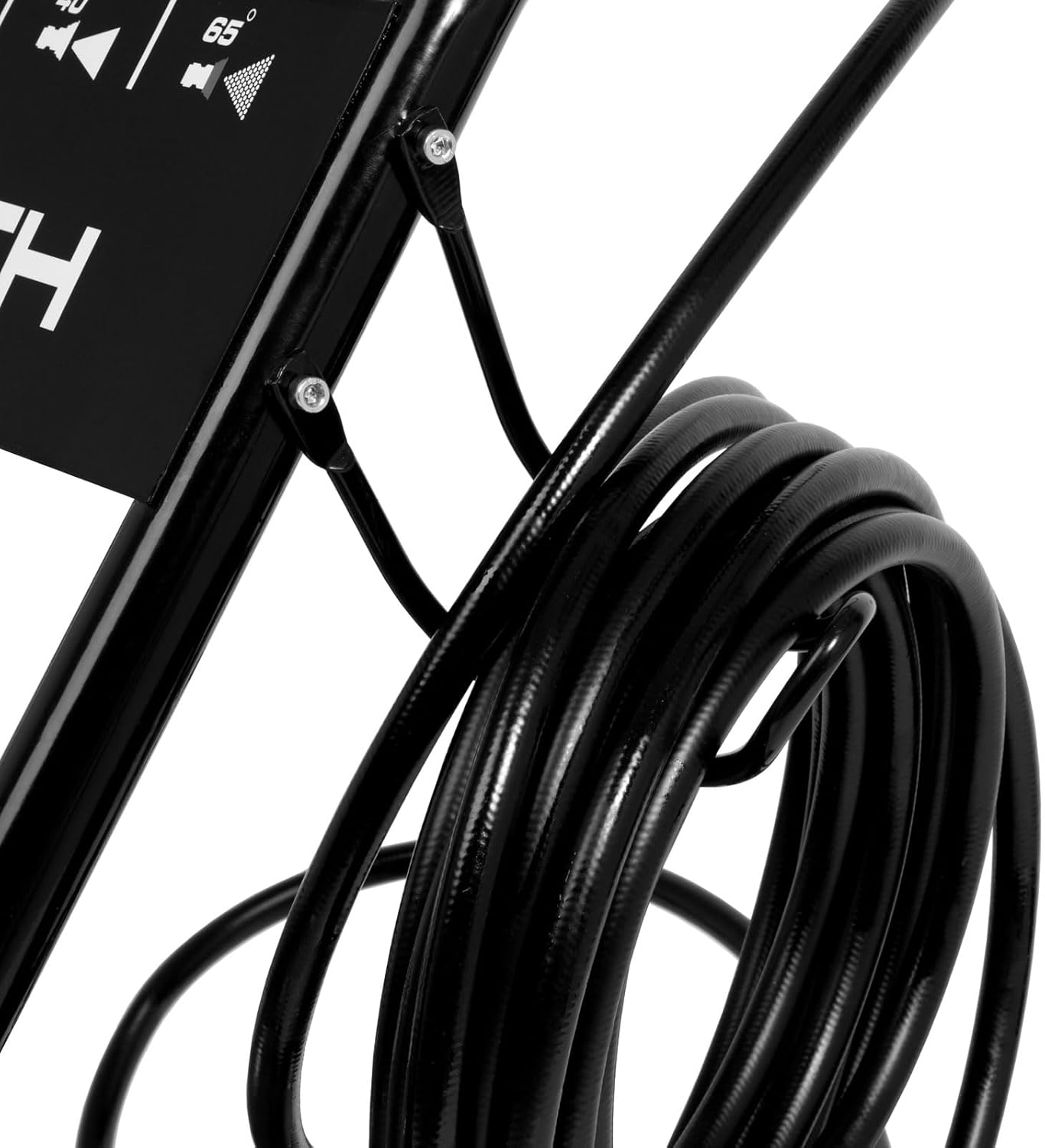
Figure 3: Wheel assembly detail

Figure 4: Spray gun and lance
4.2 Paliwo i olej
- Dodaj olej silnikowy: Before first use, fill the engine crankcase with the recommended 4-stroke engine oil (not included). Refer to the engine manual for specific oil type and capacity. Do not overfill.
- Dodaj paliwo: Napełnij zbiornik paliwa świeżą benzyną bezołowiową. Nie przepełniaj zbiornika. Upewnij się, że korek wlewu paliwa jest dobrze dokręcony.
5. Instrukcja obsługi
5.1 Uruchomienie silnika
- Ensure the unit is on a level surface and connected to a water source.
- Otwórz zawór paliwa.
- Set the choke lever to the 'CHOKE' position (if the engine is cold).
- Ustaw przełącznik silnika w pozycji „ON”.
- Mocno pociągnij za linkę rozrusznika, aż silnik uruchomi się.
- Po uruchomieniu silnika stopniowo przesuwaj dźwignię ssania do pozycji „PRACA”.
5.2 Using the Spray Gun and Nozzles
The pressure washer comes with 5 quick-connect nozzles, each designed for different applications:
- Red (0°): Pin-point jet for intense cleaning of small, stubborn spots. Use with extreme caution.
- Yellow (15°): Narrow fan spray for concentrated cleaning on hard surfaces.
- Green (25°): Średnio spryskujący strumień powietrza do ogólnego czyszczenia większości powierzchni.
- White (40°): Szeroka dysza rozpylająca do delikatnego czyszczenia delikatnych powierzchni.
- Black (65°/Soap): Low-pressure wide spray for applying detergent.

Figure 5: Quick-connect nozzles

Red (0°)

Yellow (15°)

Green (25°)

White (40°)

Czarny (Mydło)
5.3 Stosowanie detergentu
To apply detergent, ensure the black (65°/Soap) nozzle is attached. The pressure washer will draw detergent from an external container via a separate hose (if included or connected to the pump's detergent inlet). Follow detergent manufacturer's instructions for mixing ratios.

Figure 6: Detergent application setup
5.4 Wyłączanie
- Zwolnij spust pistoletu natryskowego.
- Turn the engine switch to 'OFF'.
- Zamknij zawór paliwa.
- Odłącz dopływ wody.
- Naciśnij spust pistoletu natryskowego, aby uwolnić pozostałe w układzie ciśnienie.
6. Konserwacja
Regularna konserwacja zapewnia optymalną wydajność i wydłuża żywotność myjki ciśnieniowej.
6.1 Konserwacja silnika
- Olej silnikowy: Przed każdym użyciem należy sprawdzić poziom oleju. Wymieniać olej po pierwszych 5 godzinach pracy, a następnie co 25–50 godzin lub raz w roku.
- Filtr powietrza: Clean or replace the air filter every 25-50 hours or more frequently in dusty conditions.
- Świeca: Sprawdzaj i czyść świecę zapłonową co roku lub co 100 godzin. Wymień, jeśli jest zużyta.
6.2 Pump and Nozzle Maintenance
- Filtr wody: Regularnie sprawdzaj i czyść filtr wlotowy wody, aby zapobiec przedostawaniu się zanieczyszczeń do pompy.
- Dysze: Clean clogged nozzles using the provided nozzle cleaning tool or a thin wire.
- Przechowywanie w zimie: If storing in freezing temperatures, drain all water from the pump and hoses, or use a pump protector/antifreeze solution.
7. Rozwiązywanie Problemów
W tej sekcji znajdziesz informacje o typowych problemach i ich rozwiązaniach.
| Problem | Możliwa przyczyna | Rozwiązanie |
|---|---|---|
| Silnik nie chce się uruchomić | Brak paliwa Wyłącznik silnika wyłączony Nieprawidłowe dławienie Niski poziom oleju | Dodaj paliwo Ustaw przełącznik w pozycji ON Wyreguluj ssanie Dolej oleju do prawidłowego poziomu |
| Niskie ciśnienie | Zatkana dysza Niewystarczające zaopatrzenie w wodę Powietrze w pompie Zużyte uszczelki pompy | Wyczyść dyszę Ensure adequate water flow Purge air by running with trigger open Skontaktuj się z centrum serwisowym |
| Silnik pracuje nierówno | Zwietrzałe paliwo Brudny filtr powietrza Zabrudzona świeca zapłonowa | Spuścić paliwo i napełnić świeżym paliwem Wyczyść/wymień filtr powietrza Wyczyść/wymień świecę zapłonową |
8. Specyfikacje
| Funkcja | Specyfikacja |
|---|---|
| Numer modelu | GG1-HR196-200 |
| Marka | WIECZÓR |
| Typ silnika | 6.5 HP 4-stroke Gasoline Engine |
| Maksymalne ciśnienie robocze | 210 bar |
| Maksymalna szybkość przepływu | 1000 litrów na godzinę |
| Pojemność zbiornika paliwa | 3.6 litrów |
| Długość węża wysokociśnieniowego | 5 metrów |
| Waga przedmiotu | 27 kilogramów |
| Kolor | Czarny |
9. Gwarancja i wsparcie
For warranty information or technical support, please refer to the documentation included with your purchase or contact the EBERTH customer service department. Keep your proof of purchase for warranty claims.