
CME 1021
Generic Espresso Machine User Manual
Model: CME 1021
Marka: Generic
Ważne zabezpieczenia
Podczas korzystania z urządzeń elektrycznych należy zawsze przestrzegać podstawowych zasad bezpieczeństwa, aby zminimalizować ryzyko pożaru, porażenia prądem elektrycznym i/lub obrażeń ciała, w tym:
- Przeczytaj wszystkie instrukcje.
- Nie dotykaj gorących powierzchni. Używaj uchwytów lub gałek.
- To protect against electric shock, do not immerse cord, plugs, or espresso machine in water or other liquid.
- Należy zachować ścisły nadzór, jeżeli z urządzenia korzystają dzieci lub w ich pobliżu.
- Odłącz od gniazdka, gdy nie jest używane i przed czyszczeniem. Pozostaw do ostygnięcia przed założeniem lub zdjęciem części oraz przed czyszczeniem urządzenia.
- Nie używaj żadnego urządzenia z uszkodzonym przewodem lub wtyczką lub gdy urządzenie nie działa prawidłowo lub zostało upuszczone lub uszkodzone w jakikolwiek sposób.
- Użycie akcesoriów niezalecanych przez producenta urządzenia może spowodować pożar, porażenie prądem lub obrażenia ciała.
- Nie stosować na zewnątrz.
- Nie pozwól, aby przewód zwisał z krawędzi stołu lub blatu i dotykał gorących powierzchni.
- Nie umieszczać na gorącym palniku gazowym lub elektrycznym ani w jego pobliżu, a także w nagrzanym piekarniku.
- Zawsze najpierw podłącz wtyczkę do urządzenia, a następnie podłącz przewód do gniazdka ściennego. Aby odłączyć, ustaw dowolny element sterujący w pozycji „wyłączone”, a następnie wyjmij wtyczkę z gniazdka ściennego.
- Nie używaj urządzenia niezgodnie z jego przeznaczeniem.
- Jeśli podczas parzenia zostanie zdjęta pokrywka, może dojść do oparzenia.
Produkt ponadview
Familiarize yourself with the components of your Generic Espresso Machine.


Kluczowe komponenty:
- Panel sterowania: Intuitive interface for selecting espresso shots and steam.
- Uchwyt filtra: Pojemnik na zmieloną kawę do zaparzenia.
- Dysza pary: Do spieniania mleka do latte i cappuccino.
- Zbiornik wodny: Detachable 40 oz (1.2 L) capacity for water.
- Taca ociekowa: Collects excess liquid and is removable for easy cleaning.
- Koszyki filtracyjne: Includes single and double shot filters.
Organizować coś
1. Wstępne czyszczenie:
Before first use, wash the water reservoir, portafilter, filter baskets, and drip tray with warm soapy water. Rinse thoroughly and dry all parts.
2. Napełnianie zbiornika na wodę:
Remove the water reservoir from the back of the machine. Fill it with fresh, cold filtered water up to the MAX line. Place the reservoir back securely into the machine.
3. First Use / Priming the Machine:
- Sprawdź, czy zbiornik na wodę jest napełniony.
- Podłącz maszynę do uziemionego gniazdka elektrycznego.
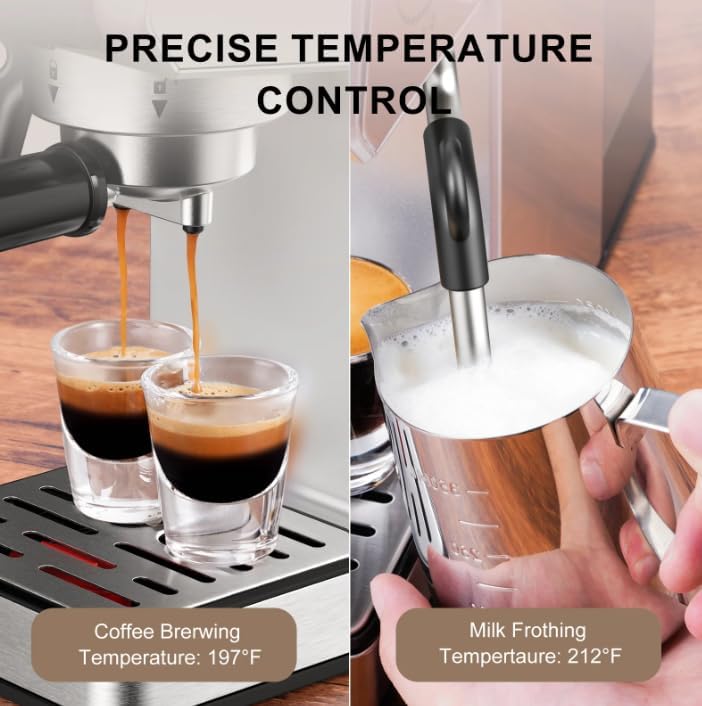
- Press the Power button. The machine will begin heating up.
- Podstaw filiżankę pod wylewkę filtra (bez kawy).
- Press the "Espresso" button to run a cycle of hot water through the system. This primes the pump and cleans the internal components. Repeat this step 2-3 times.
- Przekręć pokrętło pary, aby wypuścić parę na kilka sekund i przygotować dyszę pary.
- Maszyna jest teraz gotowa do użycia.
Instrukcja obsługi
Parzenie espresso:
- Upewnij się, że urządzenie jest włączone i rozgrzane.
- Wybierz odpowiedni filtr (pojedynczy lub podwójny) i umieść go w uchwycie filtra.
- Zmiel świeże ziarna kawy na drobną konsystencję odpowiednią do espresso.
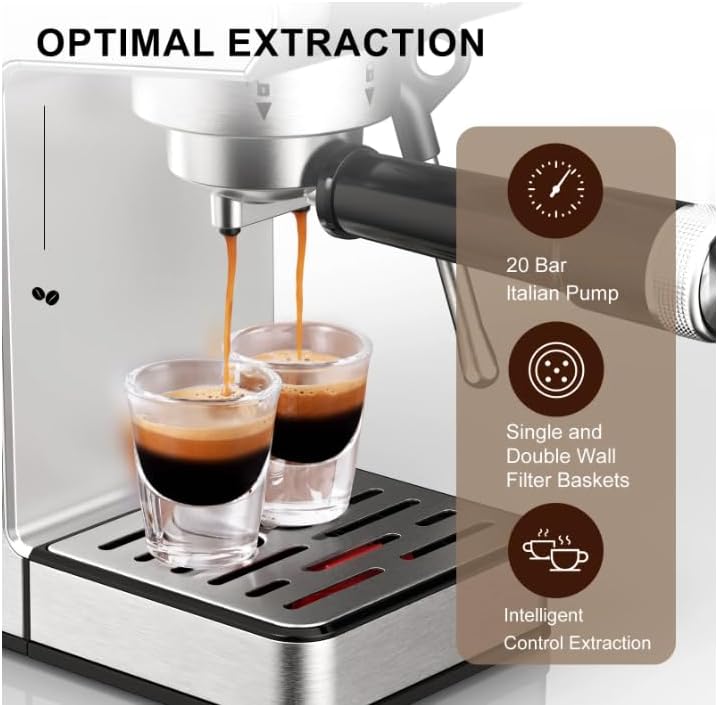
- Fill the filter basket with ground coffee. For a single shot, use approximately 7-8 grams. For a double shot, use approximately 14-16 grams.
- Tamp the coffee grounds firmly and evenly using the tamper. Wytrzyj nadmiar fusów z krawędzi uchwytu filtra.
- Włóż uchwyt filtra do głowicy grupy i mocno przekręć, aby zablokować go na miejscu.
- Umieść filiżankę(i) do espresso na tacce ociekowej, bezpośrednio pod wylewką uchwytu filtra.
- Press the "Espresso" button for a single shot or "Espresso x2" for a double shot. The machine will automatically brew the espresso.
- Once brewing is complete, remove the cup(s). Carefully remove the portafilter and discard the used coffee grounds.

Spienianie mleka:
- Napełnij dzbanek do spieniania mleka ze stali nierdzewnej zimnym mlekiem (mlecznym lub roślinnym) do jednej trzeciej jego wysokości.
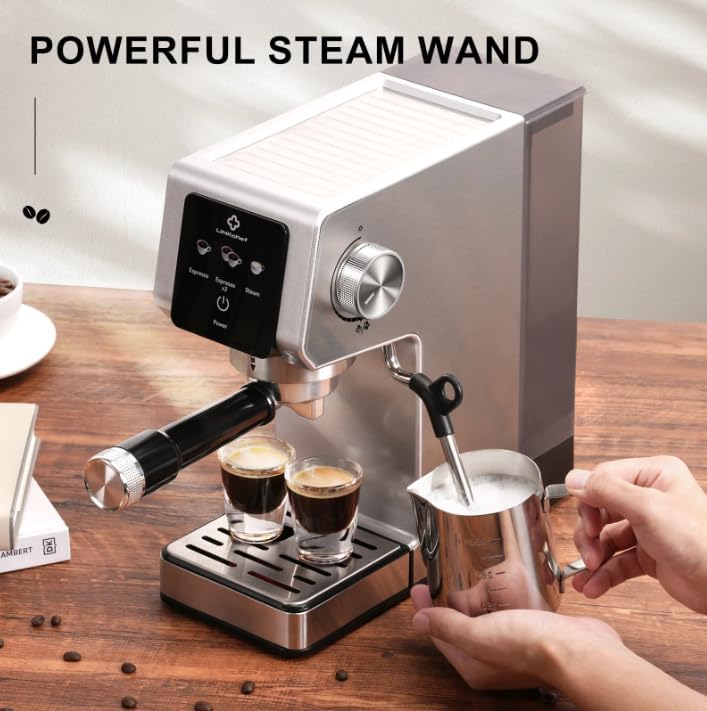
- Press the "Steam" button on the control panel. Wait for the machine to reach steaming temperature (the indicator light will illuminate steadily).
- Position the steam wand just below the surface of the milk. Turn the steam control knob to release steam.
- Lower the pitcher slightly to introduce air into the milk, creating foam. Once desired foam is achieved, submerge the wand deeper to heat the milk.
- Continue steaming until the milk reaches the desired temperature (around 150-160°F or 60-70°C).
- Turn the steam control knob off and remove the pitcher. Immediately wipe the steam wand with a damp szmatką, aby zapobiec zasychaniu resztek mleka.

Czyszczenie i konserwacja
Codzienne sprzątanie:
- Uchwyt filtra i koszyki filtracyjne: After each use, remove the portafilter, discard coffee grounds, and rinse the portafilter and filter basket under hot water. Use a brush to remove any stubborn coffee residue.
- Taca ociekowa: Codziennie opróżniaj i płucz tackę ociekową. Można ją wyjąć, co ułatwia czyszczenie.
- Dysza pary: Bezpośrednio po spienieniu mleka przetrzyj dyszę pary wodą.amp szmatką. Wydmuchaj niewielką ilość pary, aby usunąć resztki mleka z wnętrza dyszy.
- Zewnętrzny: Wytrzyj obudowę urządzenia miękką, damp płótno. Nie używaj ściernych środków czyszczących ani szorstkich gąbek.
Odwapnianie:
Z czasem w urządzeniu mogą gromadzić się osady mineralne (kamień), co wpływa na jego wydajność. Odkamieniaj urządzenie co 2-3 miesiące lub częściej, jeśli masz twardą wodę.
- Przygotuj roztwór odkamieniający zgodnie z instrukcją producenta środka odkamieniającego lub zastosuj mieszankę białego octu i wody (w stosunku 1:1).
- Napełnij zbiornik na wodę roztworem odkamieniającym.
- Umieść duży pojemnik pod uchwytem filtra i dyszą pary.
- Run several brewing cycles (without coffee) until half of the solution has passed through.
- Run steam through the steam wand until half of the remaining solution has passed through.
- Wyłącz urządzenie i odczekaj 15–20 minut.
- Empty the remaining solution and rinse the water reservoir thoroughly.
- Fill the reservoir with fresh water and run several cycles through both the portafilter and steam wand to rinse out any descaling solution residue. Repeat this rinsing process 2-3 times.
Rozwiązywanie problemów
| Problem | Możliwa przyczyna | Rozwiązanie |
|---|---|---|
| No water coming out / Machine not brewing. | Water reservoir empty; Machine not primed; Clogged filter basket. | Fill water reservoir; Prime the machine (see Setup); Clean filter basket and portafilter. |
| Espresso parzy się zbyt wolno lub wcale. | Fusy z kawy są zbyt drobne lubampZbyt mocne; Zatkany filtr. | Use coarser grind; Tamp with less pressure; Clean filter basket. |
| Espresso brews too quickly / Weak espresso. | Coffee grounds too coarse or not enough coffee; Not tamped wystarczy. | Use finer grind; Use more coffee; Tamp mocniej. |
| Dysza pary nie wytwarza pary. | Steam button not pressed; Steam wand clogged; Not enough water. | Ensure steam function is activated; Clean steam wand; Refill water reservoir. |
| Z maszyny wycieka woda. | Water reservoir not seated correctly; Drip tray full. | Ensure water reservoir is firmly in place; Empty drip tray. |
Specyfikacje
| Funkcja | Szczegół |
|---|---|
| Marka | Ogólny |
| Nazwa modelu | Profesjonalny ekspres do kawy |
| Numer modelu przedmiotu | CME 1021 |
| Kolor | Drzazga |
| Wymiary produktu | 11.89" gł. x 5.47" szer. x 11.77" wys. |
| Waga przedmiotu | 8.27 funta |
| Funkcja specjalna | Spieniacz do mleka |
| Typ ekspresu do kawy | Ekspres do kawy |
| Styl | Kompaktowy |
| Konkretne zastosowania produktu | Espresso |
| Zawarte komponenty | Portafilter, Single & Double Filter Baskets, Measuring Spoon/Tamper |
| Tryb działania | Półautomatyczny |
| Tomtage | 120 V (AC) |
| Liczba jednostek | 1.0 Liczba |
| Typ wejścia kawy | Espresso Grounds |
| Kraj pochodzenia | USA |
Gwarancja i wsparcie
For warranty information and customer support, please refer to the documentation included with your purchase or visit the official Generic product support webZachowaj dowód zakupu na wypadek roszczeń gwarancyjnych.
For further assistance, please contact our customer service team:
- Wsparcie online: [Manufacturer's Support Website Link - Placeholder]
- E-mail: support@generic.com - Placeholder
- Telefon: 1-800-XXX-XXXX (Monday - Friday, 9 AM - 5 PM EST) - Placeholder
Ask a question about this manual
Ask about setup, troubleshooting, compatibility, parts, safety, or missing instructions. Manuals+ will review the question and use this page’s manual context to help answer it.