
1. Wprowadzenie
This user manual provides comprehensive instructions for the FIDECO M.2 SSD Enclosure. Please read this manual carefully before using the product to ensure proper operation and to maximize its performance and lifespan. This enclosure is designed for external use with M.2 NVME PCIe M-Key SSDs, offering high-speed data transfer and broad compatibility.
2. Koniec produktuview
2.1 Główne cechy
- Supports M.2 NVME SSDs (M-Key and B+M Key) and M.2 SATA SSDs (B+M Key). Note: Does not support AHCI protocol SSDs.
- USB 3.1 Gen 2 interface for data transfer speeds up to 10Gbps. Backward compatible with USB 3.1 and USB 3.0.
- 100% tool-free installation for quick and easy SSD insertion and removal.
- Plug and play functionality, no additional drivers required.
- Zgodny z systemami operacyjnymi Windows, Mac OS i Linux.
- Premium aluminum alloy shell for durability and excellent heat dissipation.
- Smukła i przenośna konstrukcja.
2.2 Zawartość opakowania
- FIDECO M.2 SSD Enclosure
- Kabel USB-C do USB-A
- Przejściówka z USB-A na USB-C
- Soft fasteners for SSD installation
- Instrukcja obsługi (ten dokument)

Figure 2.1: FIDECO M.2 SSD Enclosure and included accessories.

Figure 2.2: Compatibility details for M.2 SSDs, highlighting support for NVME PCIe M-Key and B+M Key, and M.2 SATA B+M Key. AHCI protocol SSDs are not supported.
3. Konfiguracja i instalacja
The FIDECO M.2 SSD Enclosure features a tool-free design for easy installation.
- Otwórz obudowę: Slide to open the rear cover of the enclosure.
- Włóż dysk SSD: Gently insert your M.2 NVME SSD into the slot inside the enclosure. Ensure it is fully seated.
- Bezpieczny dysk SSD: Use the provided soft fastener to fix the SSD in place. This protects the SSD and ensures a secure connection.
- Zamknij obudowę: Slide the rear cover back until it clicks into place.
- Połącz z urządzeniem: Use the USB-C to USB-A cable or the USB-A to USB-C adapter with the cable to connect the enclosure to your computer or compatible device.
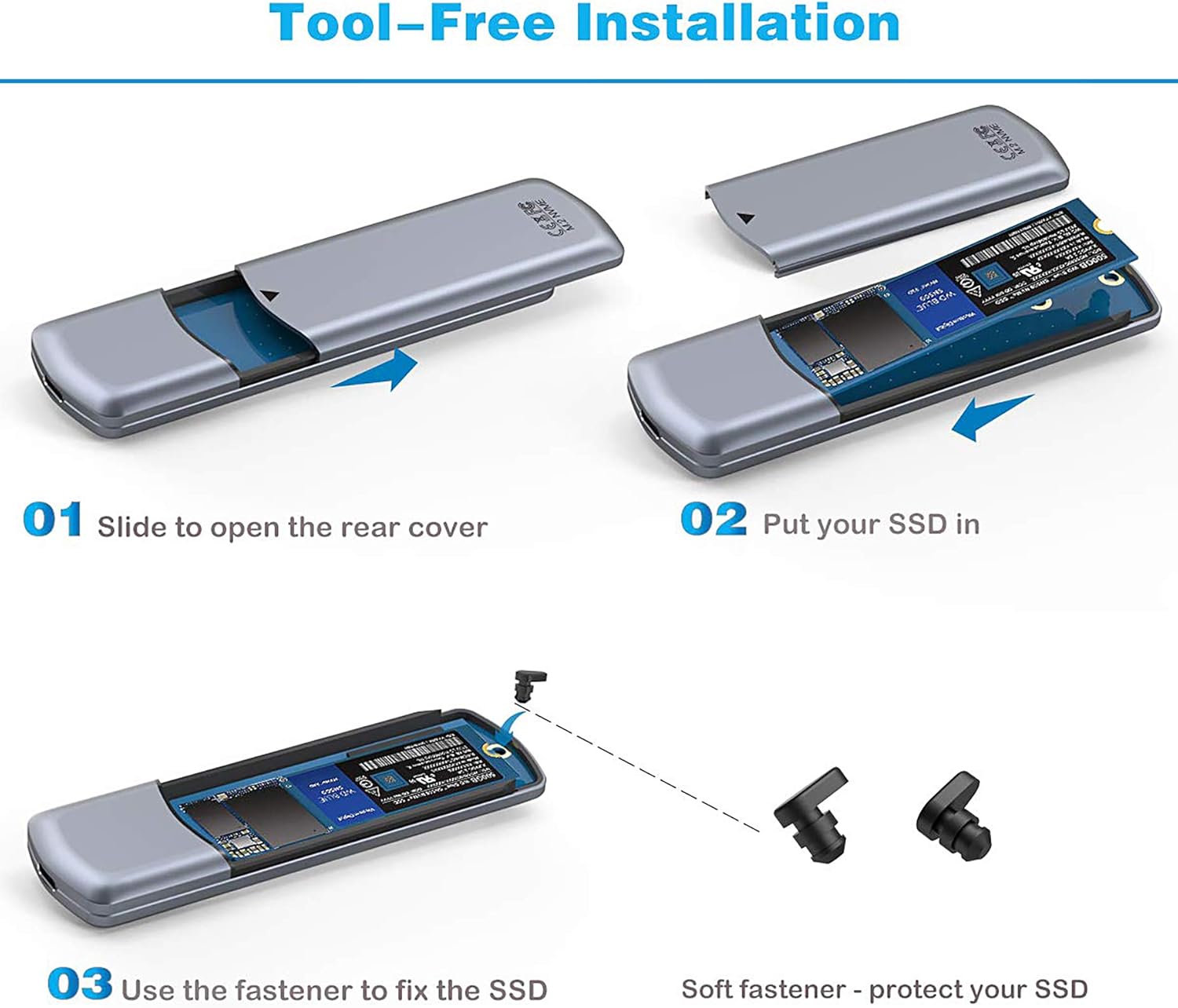
Figure 3.1: Visual guide for tool-free SSD installation: 1. Slide to open rear cover, 2. Put your SSD in, 3. Use the fastener to fix the SSD.
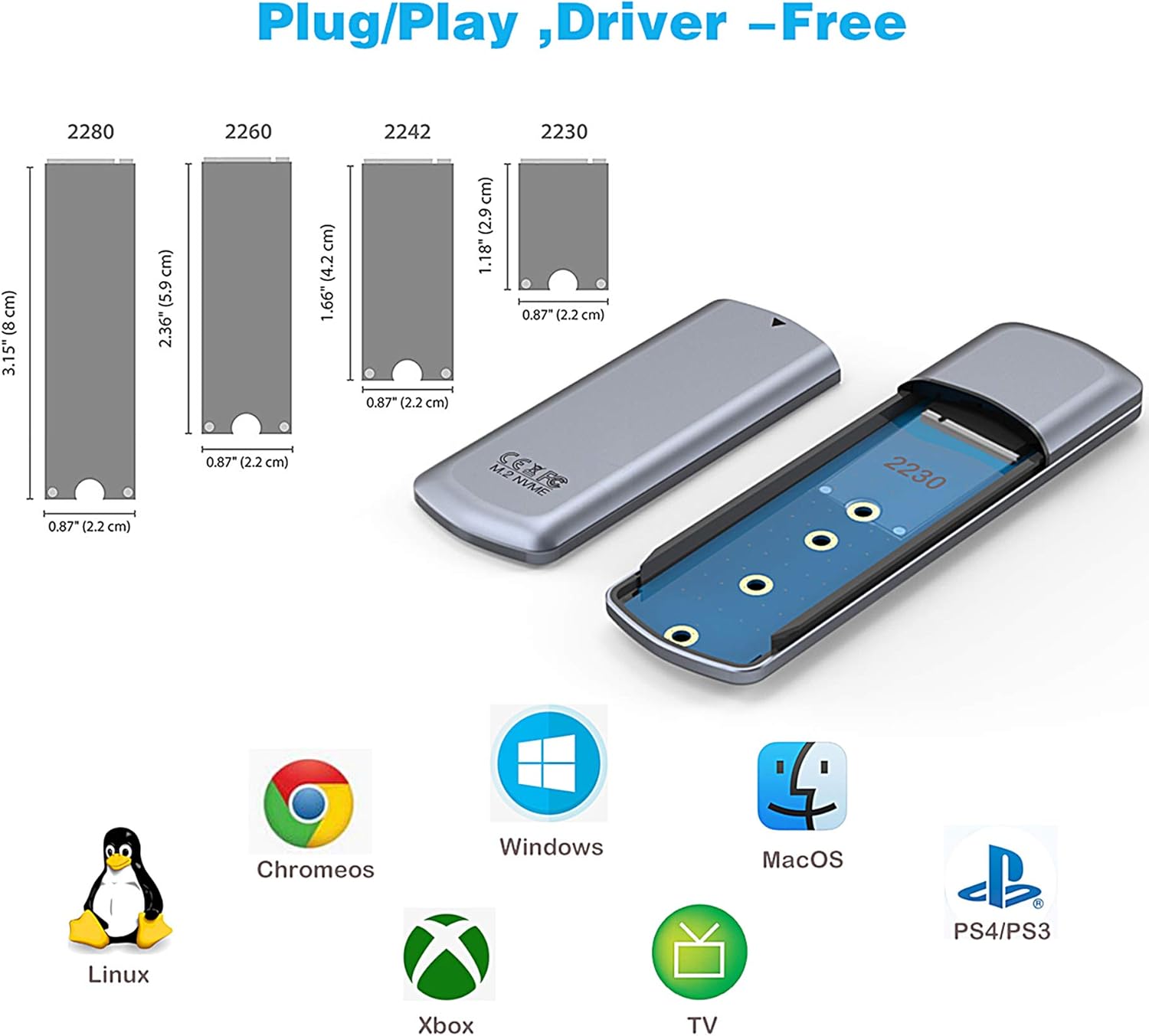
Figure 3.2: The enclosure supports M.2 SSDs of various lengths (2230, 2242, 2260, 2280) and is compatible with Linux, ChromeOS, Windows, MacOS, PS4/PS3, Xbox, and TV.
4. Instrukcja obsługi
4.1 Przesyłanie danych
Once connected, the SSD enclosure will appear as an external drive on your computer. You can drag and drop files, copy, paste, or use it for backup purposes. The USB 3.1 Gen 2 interface provides transmission speeds up to 10Gbps, significantly faster than older USB standards.
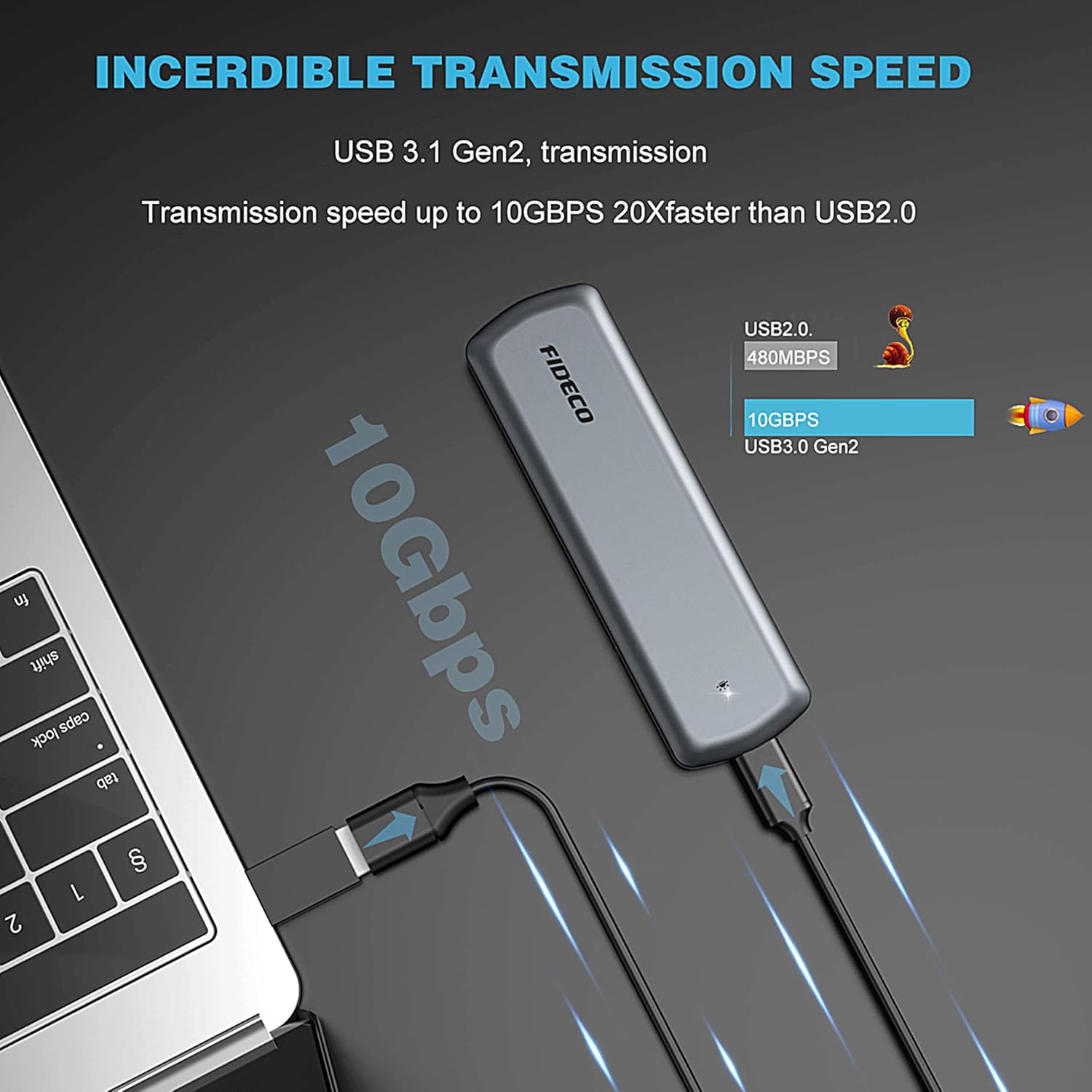
Figure 4.1: The enclosure supports USB 3.1 Gen 2, offering data transfer speeds up to 10Gbps, which is 20 times faster than USB 2.0.
4.2 Initializing a New Hard Drive
If you are using a brand new SSD, it may not be immediately recognized by your operating system until it is initialized and formatted. Follow the steps below or refer to the video for a visual guide.
Video 4.1: This video demonstrates the process of initializing a hard drive under both Windows and Mac OS, a necessary step for new SSDs to be recognized and used by your computer.
4.2.1 Inicjalizacja systemu Windows
- Kliknij prawym przyciskiem myszy ikonę „Ten komputer” (lub „Mój komputer”) i wybierz opcję „Zarządzaj”.
- W oknie Zarządzanie komputerem przejdź do „Zarządzanie dyskami” w sekcji „Magazyn”.
- Locate your new SSD (it will likely show as "Unknown" or "Not Initialized").
- Right-click on the disk and select "Initialize Disk".
- Choose the appropriate partition style (GPT is recommended for modern systems, MBR for older systems or smaller drives). Click "OK".
- Right-click on the "Unallocated" space on the new disk and select "New Simple Volume".
- Follow the New Simple Volume Wizard, assigning a drive letter and choosing a file system (NTFS for Windows, exFAT for cross-platform compatibility).
- Complete the wizard to format the drive.
4.2.2 Mac OS Initialization
- Open "Disk Utility" (found in Applications > Utilities, or via Spotlight search).
- In Disk Utility, select your new SSD from the sidebar (it may appear as "Uninitialized").
- Kliknij przycisk „Wymaż” na pasku narzędzi.
- Provide a name for the drive, choose a format (e.g., APFS for macOS 10.13+, Mac OS Extended (Journaled) for older macOS, or exFAT for cross-platform compatibility), and a scheme (GUID Partition Map is recommended).
- Kliknij „Wymaż”, aby sformatować dysk.
4.3 Wszechstronne zastosowanie
The FIDECO M.2 SSD Enclosure is highly versatile, allowing you to back up pictures, watch movies, or access data from various devices.

Figure 4.2: Super convenience: Use with smartphones for on-the-go data access.
Figure 4.3: Seamlessly connect to laptops for expanded storage.
Figure 4.4: Ideal for desktop use, providing fast external storage.
5. Konserwacja i pielęgnacja
- Rozpraszanie ciepła: The aluminum alloy shell is designed for excellent heat dissipation. While normal operation may cause the enclosure to warm up, prolonged heavy use might lead to higher temperatures. Avoid leaving it plugged in for extended periods if not actively in use, especially during intensive data transfers.
- Bezpieczne usuwanie: Always safely eject the drive from your operating system before disconnecting the enclosure to prevent data corruption.
- Czyszczenie: Do czyszczenia zewnętrznej części obudowy używaj miękkiej, suchej ściereczki. Unikaj płynnych środków czyszczących i materiałów ściernych.
- Składowanie: Przechowuj obudowę w chłodnym i suchym miejscu, z dala od bezpośredniego światła słonecznego i ekstremalnych temperatur.
- Ruchliwość: Its slim and portable design makes it easy to carry.

Figure 5.1: The enclosure features an advanced built-in JMS583 chip for steady performance and includes features for better heat dissipation and short circuit protection.

Figure 5.2: The enclosure's compact dimensions (4.8" x 1.4" x 0.47") make it highly portable.
6. Rozwiązywanie Problemów
| Problem | Możliwa przyczyna | Rozwiązanie |
|---|---|---|
| SSD not recognized by computer. | New SSD not initialized or formatted. Incorrect M.2 SSD type (e.g., AHCI not supported). Loose connection. |
|
| Enclosure gets warm during use. | Normalne działanie, szczególnie podczas przesyłania dużych ilości danych. | This is normal due to heat dissipation from the SSD. For prolonged heavy use, consider disconnecting when not in active use to allow cooling. The aluminum casing is designed to dissipate heat effectively. |
| Difficulty opening the enclosure. | Tight fit for secure closure. | Apply firm, even pressure when sliding the rear cover. Some users find adding a small piece of tape for grip can help. |
| Data corruption or loss. | Improper disconnection. Connecting to an incompatible USB port (e.g., USB 2.0 with certain SSDs). |
|
7. Specyfikacje
| Funkcja | Szczegół |
|---|---|
| Marka | FIDEKO |
| Numer modelu | FD-M204CP-JP2 |
| Kompatybilne typy dysków SSD | M.2 NVME PCIe (M-Key, B+M Key), M.2 SATA (B+M Key) |
| Interfejs | USB 3.1 Gen 2 (USB-C) |
| Szybkość przesyłu danych | Do 10 Gb/s |
| Max Supported Capacity | 2 TB |
| Tworzywo | Aluminium |
| Kolor | Szary |
| Wymiary (dł. x szer. x wys.) | 4.8 x 1.41 x 0.47 cala |
| Waga przedmiotu | 3.98 uncji |
| Obsługiwany system operacyjny | Windows, Mac OS, Linux |
8. Gwarancja i wsparcie
FIDECO products are designed for reliability and performance. For warranty information, technical support, or customer service inquiries, please refer to the contact details provided on the product packaging or visit the official FIDECO webStrona. Zachowaj dowód zakupu na wypadek roszczeń gwarancyjnych.