
1. Wprowadzenie
This manual provides detailed instructions for the safe and efficient installation, operation, and maintenance of your RAGGIE RG-PT30 MPPT Solar Charge Controller. Please read this manual thoroughly before attempting any installation or operation to ensure optimal performance and longevity of the device.
2. Instrukcje bezpieczeństwa
- Przed podłączeniem zasilania upewnij się, że wszystkie połączenia są prawidłowe i bezpieczne. Nieprawidłowe okablowanie może uszkodzić kontroler i podłączone urządzenia.
- Zawsze podłączaj najpierw akumulator, następnie panel słoneczny, a na końcu obciążenie. Odłączaj w odwrotnej kolejności: obciążenie, następnie panel słoneczny, a na końcu akumulator.
- Nie rozmontowuj ani nie próbuj samodzielnie naprawiać kontrolera. W celu uzyskania pomocy skontaktuj się z wykwalifikowanym personelem.
- Zainstaluj kontroler w dobrze wentylowanym pomieszczeniu, z dala od bezpośredniego światła słonecznego, wysokich temperatur i wilgoci.
- Use appropriate circuit breakers or fuses for the battery and solar panel circuits.
- Wear protective eyewear when working with batteries.
3. Koniec produktuview
The RAGGIE RG-PT30 is an advanced Maximum Power Point Tracking (MPPT) solar charge controller designed to optimize the power harvest from your solar panels and efficiently charge your battery bank. It supports 12V and 24V battery systems and features a 30A charging capacity, an intuitive LED display, and multiple USB output ports for charging external devices.
3.1 Główne cechy
- MPPT (Maximum Power Point Tracking) Technology for enhanced charging efficiency.
- Automatyczna regulacja głośności systemu 12V/24Vtage uznanie.
- 30A maximum charge current.
- LED screen display for real-time monitoring of input, battery, and output status.
- Four 5V 2A USB output ports for device charging.
- Comprehensive electronic protection functions.
3.2 Identyfikacja komponentów

Rycina 1: Przód View of the RAGGIE RG-PT30 Controller. This image shows the front panel of the solar charge controller, featuring the LED display at the top, two control buttons (MENU and POWER) below the display, and four 5V 2A USB output ports at the bottom right. The main terminals for solar input, battery, and load are located at the very bottom.
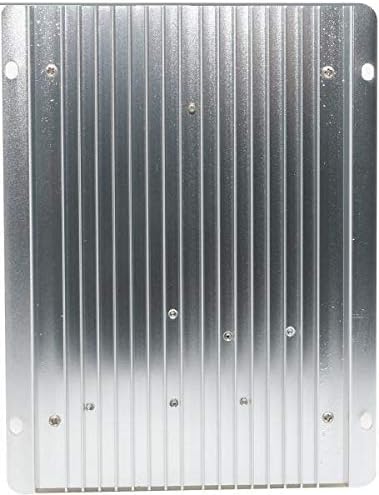
Rysunek 2: Tył View of the RAGGIE RG-PT30 Controller. This image displays the rear side of the solar charge controller, characterized by its metallic heat sink fins. These fins are designed to dissipate heat generated during operation, ensuring the controller maintains optimal temperature and performance.
4. Konfiguracja i instalacja
4.1 Montaż kontrolera
- Choose a dry, well-ventilated location, protected from direct sunlight and moisture.
- Mount the controller vertically on a non-flammable surface to allow for proper heat dissipation.
- Ensure there is sufficient clearance around the controller for air circulation.
4.2 połączeń przewodów
Follow the connection order strictly to prevent damage to the controller or system components. Use appropriate wire gauges for your system's current and distance.
- Podłącz akumulator: Connect the positive and negative terminals of the battery to the corresponding battery terminals on the controller. The controller will automatically detect the system voltage (12 V lub 24 V).
- Podłącz panel słoneczny: Connect the positive and negative terminals of the solar panel(s) to the corresponding solar input terminals on the controller.
- Podłącz obciążenie DC (opcjonalnie): Connect the positive and negative terminals of your DC load to the corresponding load terminals on the controller.
Important: Ensure correct polarity for all connections. Reverse polarity can cause permanent damage.
5. Instrukcja obsługi
5.1 wyświetlacz LED
The LED screen provides real-time information about your solar system:
- WEJŚCIE: Wyświetla objętośćtage and current from the solar panel.
- BATERIA: Pokazuje pojemność bateriitage i prąd ładowania.
- WYDAJNOŚĆ: Indicates the load voltagi aktualne.
5.2 Funkcje przycisków
- Przycisk MENU: Press to cycle through different display parameters or enter settings mode.
- Przycisk zasilania: Press to turn the DC load output ON/OFF. Long press may enter or exit certain settings.
5.3 wyjście USB
The four 5V 2A USB ports can be used to charge compatible electronic devices. These ports are active when the controller is powered and the battery has sufficient charge.
6. Konserwacja
- Regularna kontrola: Okresowo sprawdzaj wszystkie połączenia przewodów pod kątem szczelności i korozji.
- Czyszczenie: Utrzymuj kontroler w czystości, bez kurzu i zanieczyszczeń. Do czyszczenia używaj suchej ściereczki.
- Wentylacja: Ensure that the ventilation openings and heat sink fins are not obstructed.
- Sprawdzenie baterii: Regularly check the battery's state of charge and electrolyte level (for flooded batteries).
7. Rozwiązywanie Problemów
| Problem | Możliwa przyczyna | Rozwiązanie |
|---|---|---|
| Brak wyświetlacza/Kontroler nie włącza się | Akumulator nie jest podłączony lub jego głośność jest niskatage; odwrotna polaryzacja. | Sprawdź połączenia akumulatora i objtage. Upewnij się, że polaryzacja jest prawidłowa. |
| Bateria się nie ładuje | Solar panel not connected; low solar input; faulty panel/wiring. | Check solar panel connections. Verify solar panel output voltage. Ensure sufficient sunlight. |
| Ładowanie nie działa | Load output turned off; overload; faulty load. | Press POWER button to turn on load. Reduce load. Check load device. |
| Porty USB nie działają | Pojemność bateriitage too low; controller fault. | Ensure battery is adequately charged. If problem persists, contact support. |
8. Specyfikacje
| Parametr | Wartość |
|---|---|
| Model | RG-PT30 |
| Marka | RAGGIE |
| Tryb ładowania | MPPT (śledzenie punktu maksymalnej mocy) |
| Objętość systemutage | Automatyczne rozpoznawanie 12V / 24V |
| Maksymalny prąd ładowania | 30A |
| Typ wyświetlacza | Ekran LED |
| Wyjście USB | 4 x 5V / 2A |
| ASIN | B07PC3TNCB |
| Data pierwszej dostępności | 3 Marzec 2019 |
9. Gwarancja i wsparcie
For warranty information or technical support, please refer to the documentation provided with your purchase or contact your retailer. Keep your purchase receipt as proof of purchase.